FUSE Filesystem
Overview
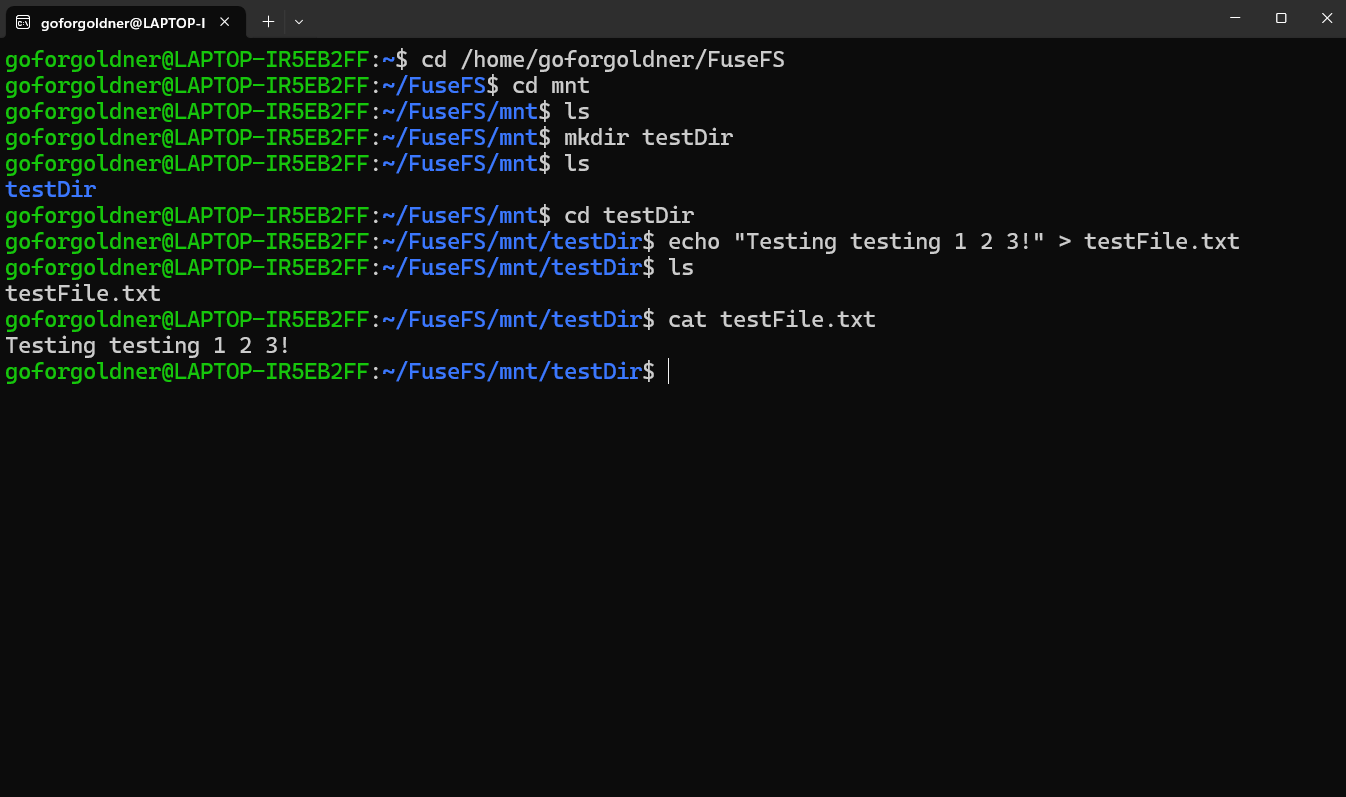
FuseFS is a custom filesystem built with the FUSE (Filesystem in Userspace) framework that enables users to create, modify, and manipulate files and directories through standard terminal commands.
By operating in userspace rather than kernel space, FuseFS offers easier development and debugging while maintaining compatibility with existing applications.
Technical Approach
Implemented in C/C++, FuseFS integrates with the Linux VFS Layer and features custom inode management, efficient data caching, and memory-mapped operation support.
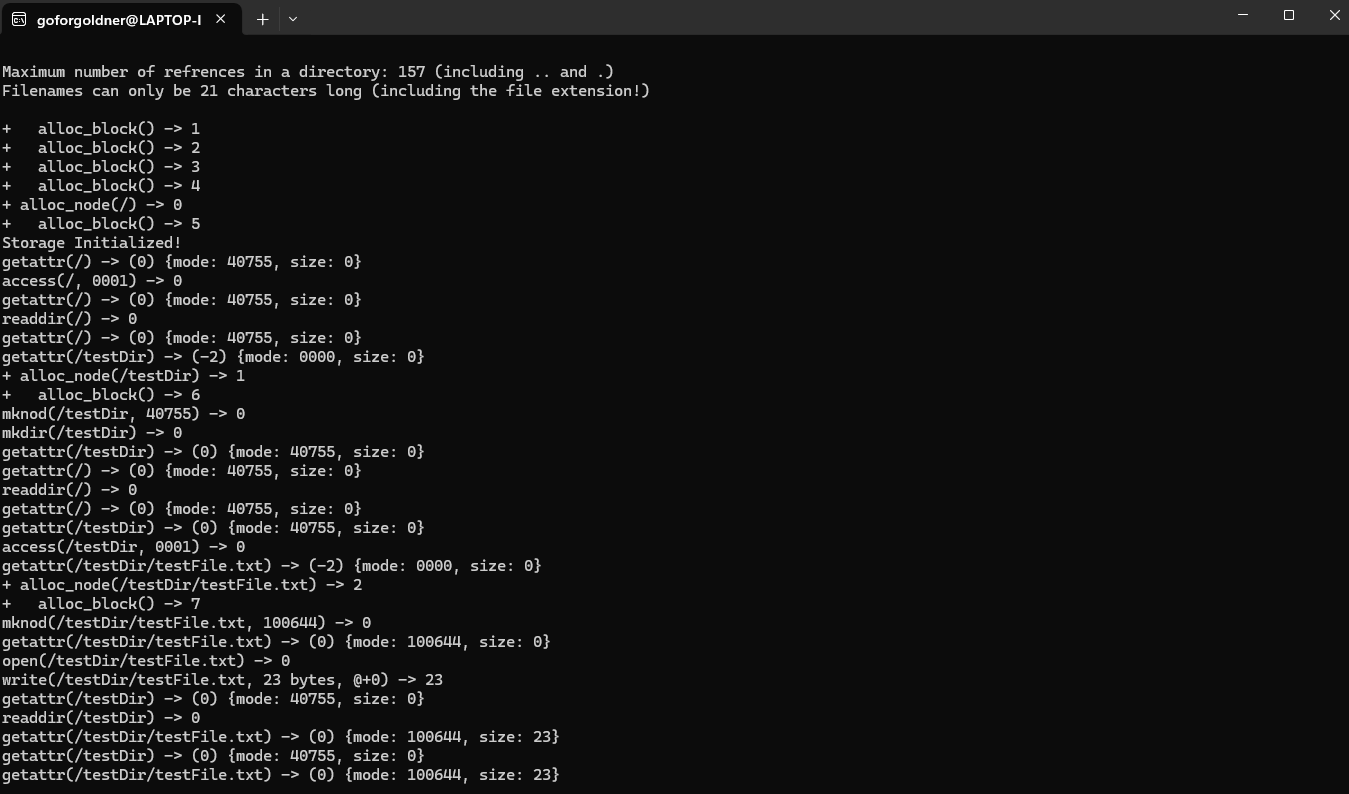
The architecture uses a layered design with separate components for FUSE interface handling, metadata management, data storage, caching, and diagnostics. This separation allows for incremental development and thorough validation of each component.
Challenges
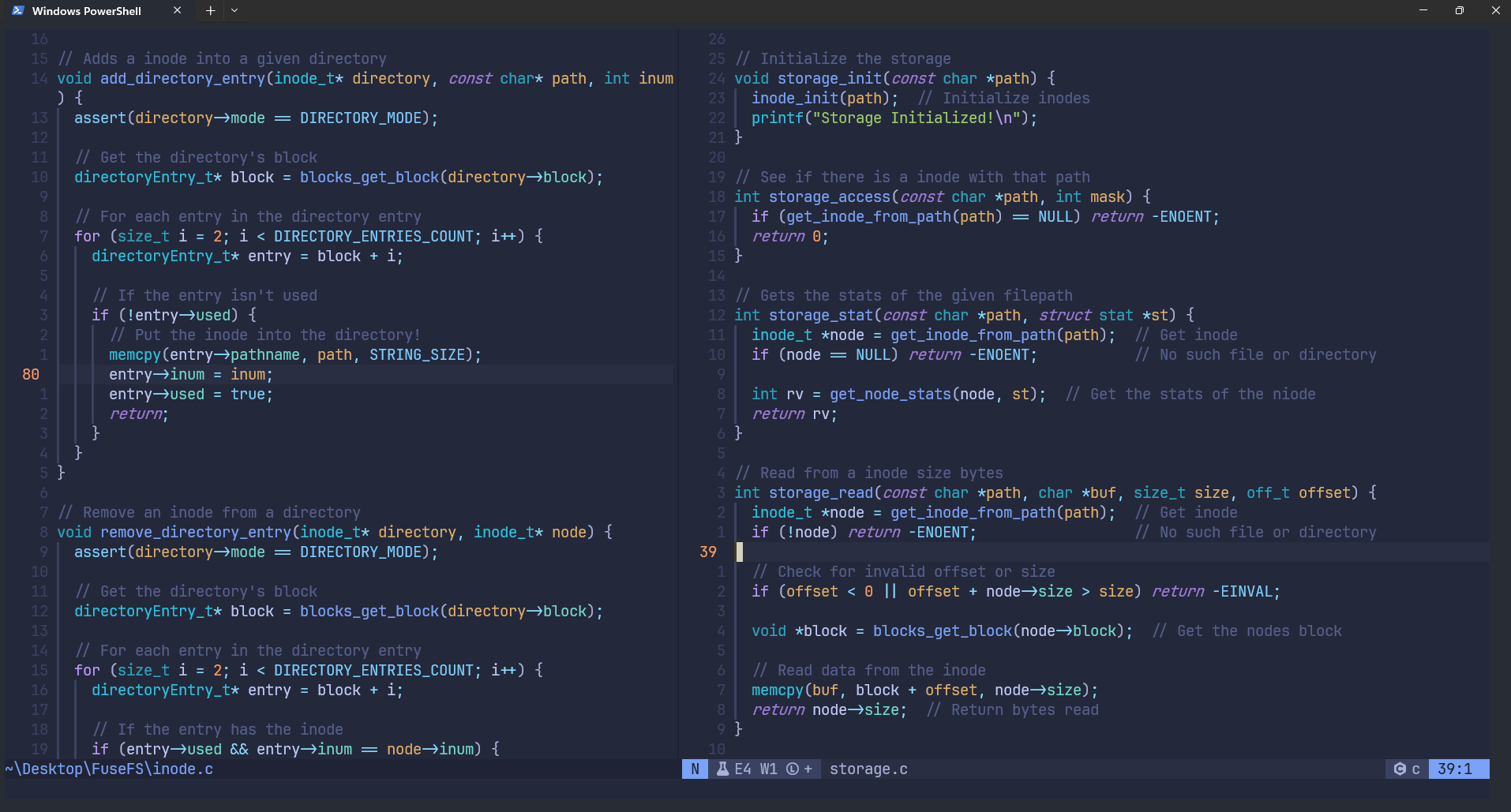
Creating a comprehensive testing framework was the most substantial challenge, as small directory structure changes could have cascading effects throughout the codebase.
Testing needed to cover isolated operations, operation sequences, concurrent access, recovery from termination, and performance under various loads. Additional challenges included maintaining consistency across operations, performance optimization, and ensuring compatibility with standard tools like rsync and tar.
Key Achievements
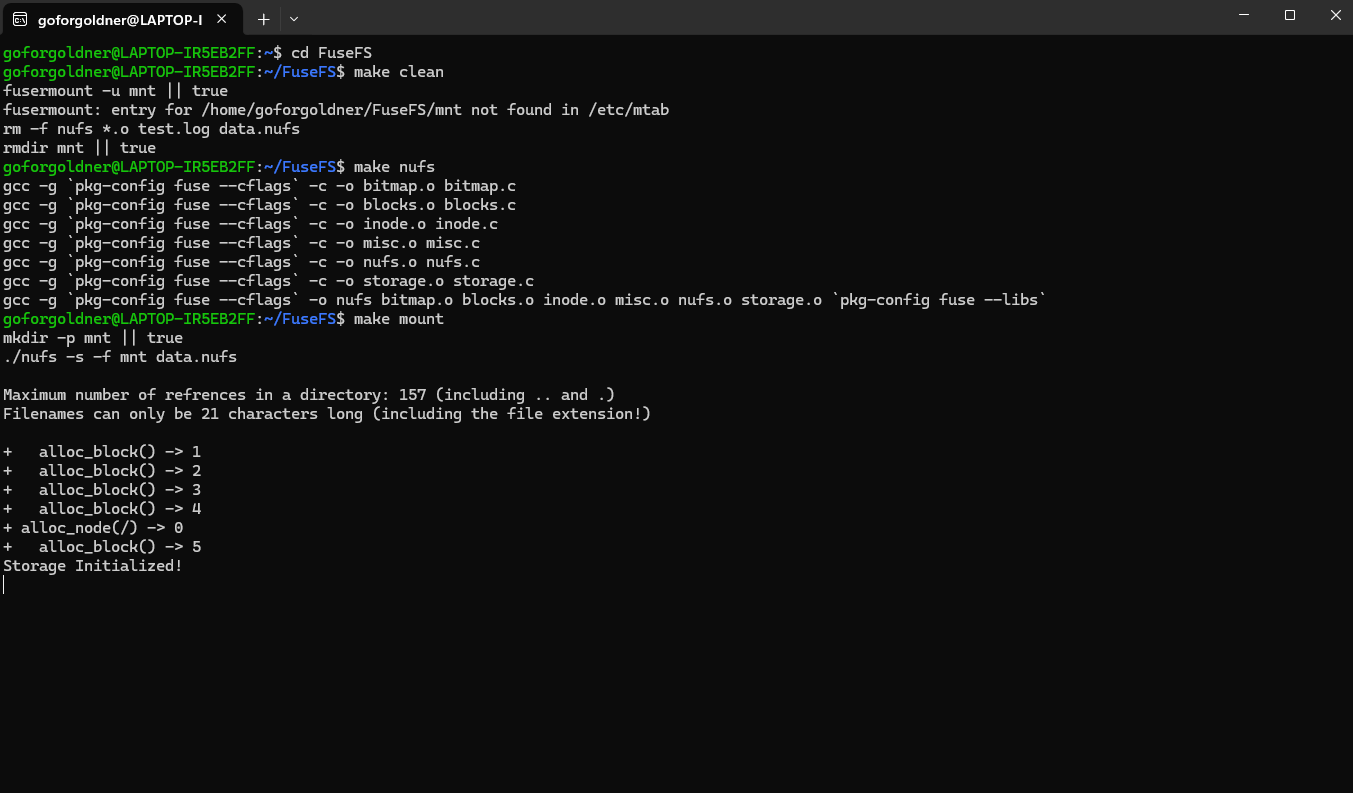
- Full filesystem functionality with proper concurrency handling
- Performance optimization through strategic caching
- Comprehensive logging and diagnostics
- Seamless integration with existing applications